Zoomark Bologna


An important outcome for the European pet sector and for science-based EU policymaking. The European Pet Organization (EPO), representing the pet sector at European level, welcomes the publication by the European Commission of the long-awaited Study on the need for, added value of and feasibility of introducing a “positive list of pets” across the EU, undertaken in the framework of the EU Action Plan Against Wildlife Trafficking. The main conclusion of the study is clear: the introduction of a comprehensive EU-wide positive list of pets is currently neither sufficiently justified by the available evidence nor proportionate. This outcome reflects many of the arguments and alternative policy recommendations that EPO has consistently put forward in its engagement with the European institutions over recent years. EPO President Svein A. Fossa, said ““I welcome the study’s conclusion that the evidence does not justify a comprehensive EU-wide positive list. A list can tell you whether a species is allowed. It cannot tell you whether an animal is receiving the care it needs or whether it was legally sourced. The study gives the EU a credible way forward. Equip owners to meet their animals’ needs, enforce the rules already in place and target restrictions where the evidence shows they are needed. Responsible pet businesses and breeders have a practical role in making that work.” Key findings of the study While acknowledging that genuine challenges exist within certain parts of the pet trade and that greater regulatory coherence across the EU would be beneficial, the study highlights that: The nature and severity of risks vary considerably depending on the species, origin, trade pathways and conditions of keeping. Coordinated EU action could bring added value, particularly in relation to data collection, traceability, enforcement and regulatory coherence. There is insufficient evidence to demonstrate that a comprehensive EU-wide positive list is necessary, proportionate or operationally feasible under current conditions. Importantly, the study favours a targeted, risk-based approach, strengthening existing legislation and addressing identified high-risk species and trade pathways, rather than introducing a general prohibition on all species that have not been previously assessed and authorised. EPO’s longstanding engagement on positive lists Throughout the development of the study, EPO has actively engaged with the study consortium, the European Commission and relevant stakeholders, providing scientific, technical and practical expertise from across the European pet sector. The presentation of the preliminary findings in June 2025 marked an important turning point in the development of the study. EPO raised a number of substantive concerns regarding the methodology, the available scientific evidence and the proportionality of a positive list approach, calling for a reassessment of the findings and greater consideration of alternative policy measures. The conclusions published today are particularly welcome given EPO’s longstanding engagement on this issue. They represent an important milestone in EPO’s longstanding advocacy for science-based, proportionate and effective policymaking. Education and enforcement rather than blanket prohibitions As reiterated in its position paper on positive lists, EPO firmly believes that improving animal welfare, protecting biodiversity and combating illegal wildlife trade require effective and targeted measures, rather than blanket restrictions on responsible pet keeping. EPO continues to advocate for better implementation and enforcement of existing EU legislation along with education of pet owners and promotion of responsible ownership and high standards of animal care. EPO believes that the focus of public policy should be on ensuring that animals are kept responsibly and that their welfare needs are adequately met, rather than simply restricting the diversity of species that may be kept. EPO has consistently advocated for the education of pet owners and the promotion of responsible ownership, ensuring that the specific welfare needs of each animal can be adequately met: the right pet, with the right owner, in the right environment. Looking ahead: continued engagement and cooperation While the study does not permanently rule out the possibility of a positive list, it recognises that the scientific evidence, assessment methodologies and institutional capacity necessary to justify such an instrument are currently insufficient. It is important to recall that the study is exploratory and does not constitute a legislative proposal or a formal policy decision by the European Commission. Its conclusions should now inform future EU policy discussions on the trade in and keeping of pets. EPO remains fully committed to working constructively with the European institutions and other stakeholders to promote animal welfare, responsible pet ownership, biodiversity conservation and a legal, sustainable and responsible pet trade. The responsible pet sector must be recognised as part of the solution and as a valuable partner in achieving these shared objectives.
27/11/26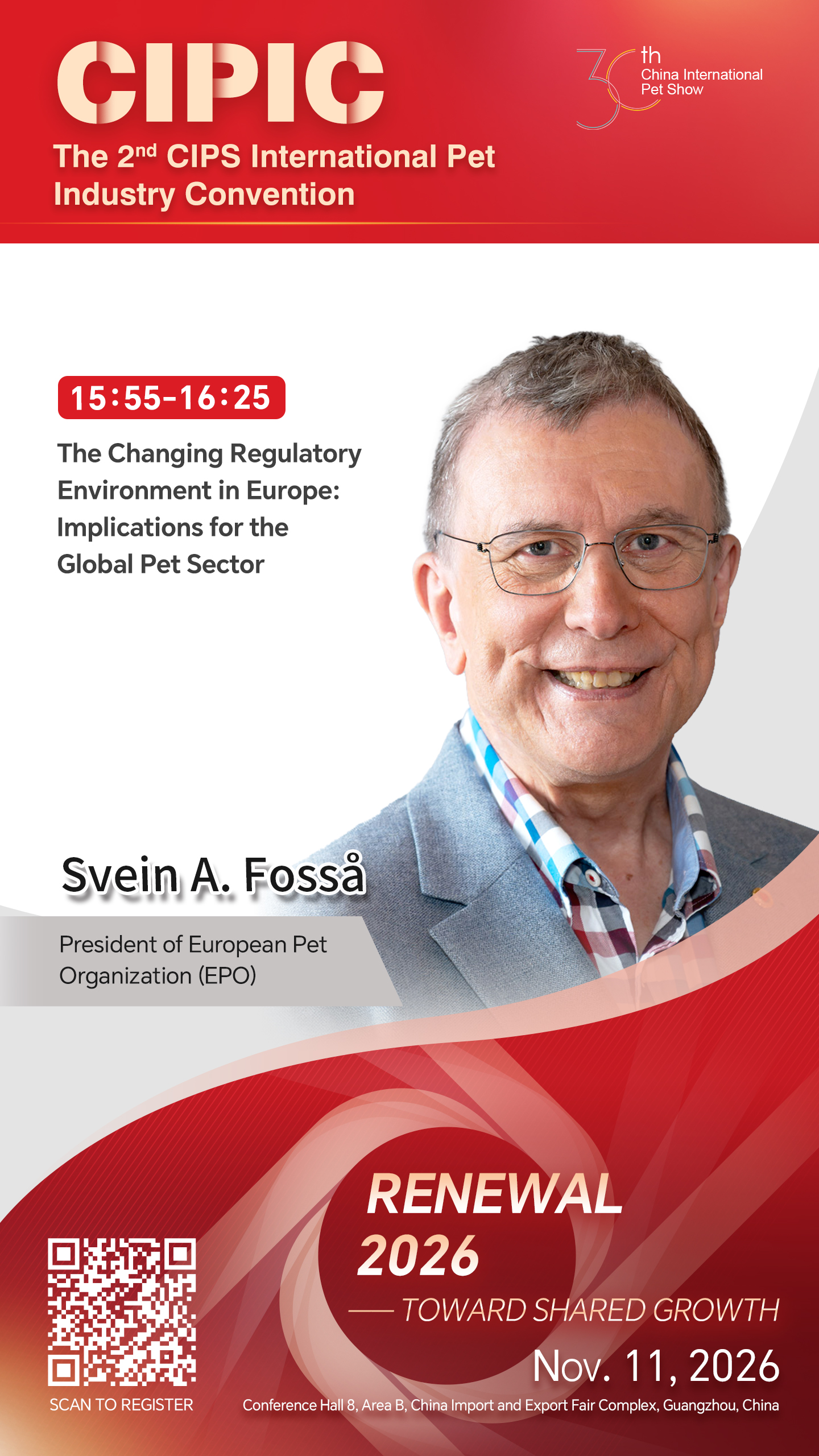
The European Pet Organization (EPO) will participate in the 2nd CIPS International Pet Industry Convention (CIPIC), taking place on 11 November 2026 in Guangzhou, China, ahead of the 30th China International Pet Show (CIPS 2026). EPO will be represented by its President, Svein A. Fosså, who has been invited to contribute as a speaker to this year's convention, held under the theme “Renewal 2026 – Toward Shared Growth.” As part of the programme, Svein will deliver a presentation entitled “The Changing Regulatory Environment in Europe: Implications for the Global Pet Sector.” His contribution will focus on the evolving European regulatory landscape affecting the pet sector and the implications of EU policy developments for the international pet industry. European legislation increasingly addresses issues of direct relevance to the pet sector, including animal welfare, responsible pet keeping, animal sourcing and trade. These developments have implications extending beyond the EU market, making international dialogue and cooperation particularly important. EPO's participation will provide an opportunity to share the European pet sector's perspective on these developments and highlight the importance of science-based, proportionate and practical regulatory approaches that safeguard animal welfare while supporting responsible pet keeping, sustainable trade and the future of the sector. Beyond his contribution to CIPIC, Svein A. Fosså will also participate in activities during CIPS 2026, taking place from 12 to 15 November in Guangzhou, including further speaking engagements and his role as a member of the international jury for the CIPS Innovation Award. Through its participation in CIPIC and CIPS 2026, EPO aims to strengthen its engagement with international stakeholders, promote exchanges on regulatory developments and reinforce cooperation across the global pet sector. Presentation details Event: 2nd CIPS International Pet Industry Convention (CIPIC) Date: 11 November 2026 Time: 15:55–16:25 Speaker: Svein A. Fosså, President of EPO Presentation: The Changing Regulatory Environment in Europe: Implications for the Global Pet Sector Venue: Conference Hall 8, Area B, China Import and Export Fair Complex, Guangzhou, China
22/10/26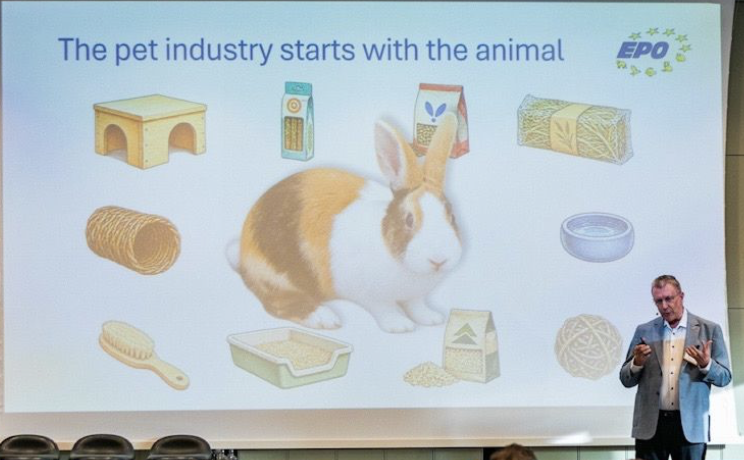
EPO was pleased to participate in the International Pet Conference 2026, held in Copenhagen on 13–14 October, bringing together leading representatives from across the international pet industry to exchange views on the sector's challenges, opportunities and future. EPO was represented by its President, Svein A. Fosså, and Secretary General, Nathalie Gamain, who contributed to the conference programme on 13 October through a dedicated session entitled “Responsible Animal Sourcing: Securing the Future of the Pet Industry”. Addressing an audience of approximately 160 industry representatives, including manufacturers, distributors and retailers, Svein A. Fosså highlighted a fundamental message: the future of the pet industry depends on the animals themselves. His presentation emphasised the importance of ensuring a sustainable supply of responsibly sourced animals and preserving the diversity of species that people can responsibly keep as pets. These considerations are essential not only for animal welfare but also for the long-term sustainability of the entire pet sector. The presentation was followed by a moderated discussion involving both the EPO President and Secretary General, providing an opportunity to highlight EPO's role in representing the interests of the European pet sector at EU level, particularly in the context of evolving European legislation and policy discussions affecting pet keeping and the trade in pet animals. The session also underlined the importance of responsible, science-based and proportionate approaches to animal welfare, sourcing and pet keeping, while ensuring that the sector remains actively involved in shaping its own future. Beyond its contribution to the conference programme, EPO's participation provided a valuable opportunity to engage directly with industry representatives, exchange perspectives on shared challenges and further strengthen cooperation across the international pet community. EPO warmly thanks the International Pet Conference organisers, PETworldwide and Dähne Verlag, for the invitation and the excellent organisation of this year's event. EPO remains committed to ensuring that the European pet sector has a strong and informed voice in discussions shaping its future, recognising that responsibly sourced animals and responsible pet keeping are at the very heart of a sustainable pet industry. Credit photo: Thomas Goetz
16/10/26
On September 17th, 2026, EPO held its latest Board meeting online, bringing together all EPO Board members to review the organisation’s ongoing activities and discuss priorities for the months ahead. The meeting provided an important opportunity to take stock of EPO’s work and exchange on current developments affecting the European pet sector. Discussions also focused on EPO’s upcoming activities, membership and partnerships, as well as the organisation’s continued engagement on key EU policy and regulatory files. Regular exchanges within the Board form an important part of EPO’s governance, helping to ensure strategic alignment and close coordination as the organisation continues to strengthen the representation of the pet sector at European level. The meeting brought together EPO’s full Board: Svein A. Fosså (NZB) – President Gerrit Hofstra (Dibevo) – Vice-President Andreas Popper (WKO) – Vice-President Frédéric Amblard (PRODAF) – Vice-President Volker Ennenbach (ZZF) – Treasurer The current Board composition reflects the appointments and renewals agreed at EPO’s 2026 AGM, when Svein A. Fosså and Gerrit Hofstra were reappointed and Volker Ennenbach was elected Treasurer.
17/09/26